
How to store fresh Pakistani mangoes in the UK
Counter, fridge, freezer, the three-stage storage method that turns a single carton into two weeks of mango.
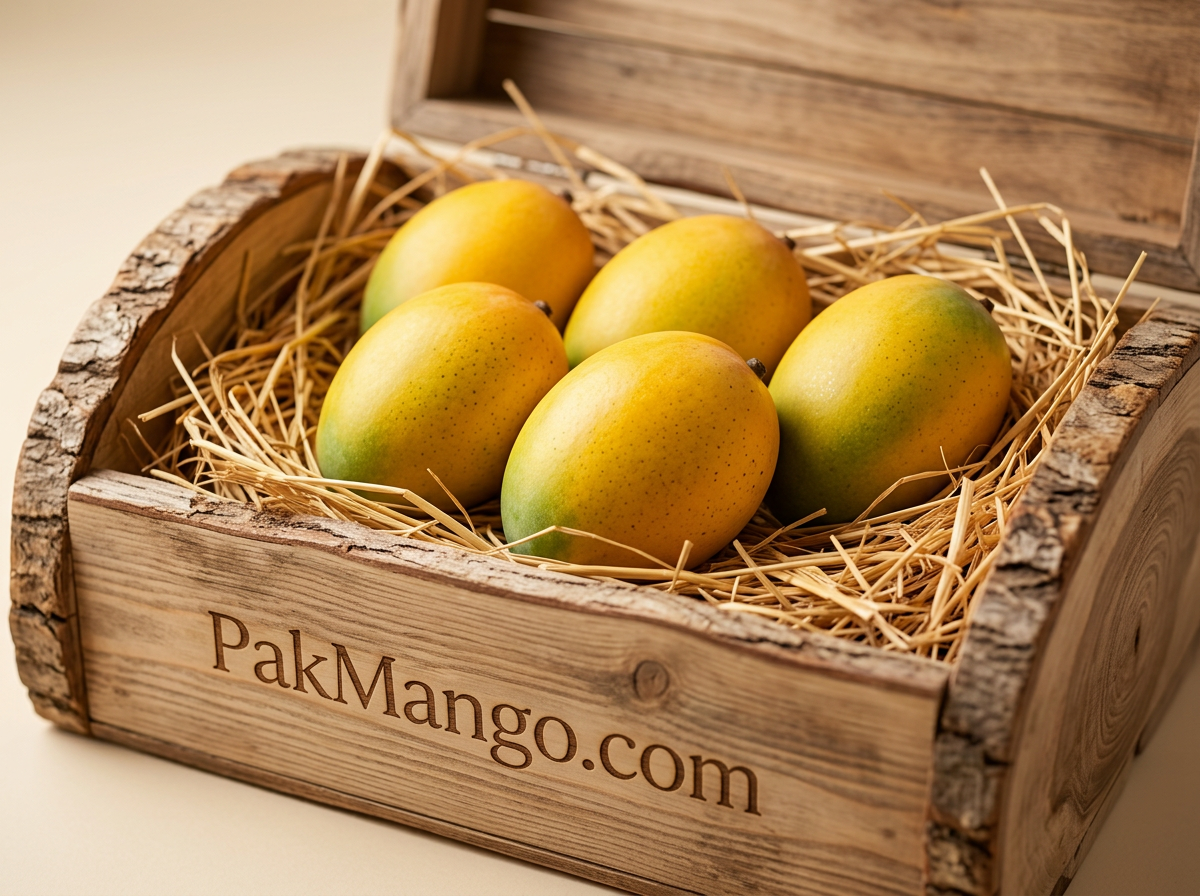
Stage 1: room-temperature counter
When the carton arrives, open it and lay the fruit out in a single layer on the kitchen counter. A flat-bottomed bowl works; a tray is better; stacking inside the closed box risks bruising.
Most fruits will ripen in 24 to 72 hours. As each fruit yields to gentle pressure, move it to the next stage. Don't move them all at once, uneven ripening is the norm and lets you spread your eating window naturally.
Stage 2: fridge
Once a fruit is ripe (yields to pressure, fragrant at the stem), move it to the fridge to slow further ripening. Storage in the main fridge compartment at 4 to 6°C gives you 3 extra days at peak flavour.
Don't refrigerate under-ripe fruit, cold permanently arrests the ripening process and leaves you with starchy mango. Only ripe fruit goes in the fridge.
Stage 3: freezer (for surplus)
If your carton is ripening faster than you can eat, freeze the surplus as pulp. Peel each fruit, slice the flesh off the stone, and blend smooth with one teaspoon of lemon juice per kilogram of pulp (the lemon prevents oxidation).
Freeze in 250g portions in zip-lock bags, flattened so they stack neatly. Frozen pulp keeps for 9 months and is the secret to year-round mango lassi, kulfi, sorbet and chutneys.
Making a single carton last two weeks
A 3kg PakMango.Com carton typically contains 6–8 large fruits (Chaunsa, Sindhri), 14–20 small fruits (Anwar Ratol) or 5–7 mid-size fruits (Dosehri, Langra). Used well, that's two weeks of mango.
Day 1 to 3: counter ripening. Day 4 to 7: eat the ripest fruits fresh. Day 8 to 10: refrigerate the remaining ripe fruits and eat as a chilled treat. Day 11 to 14: freeze the rest as pulp for lassi through autumn.
How Dosehri fits into the Pakistani mango season
The Pakistani mango season typically runs from May to August. Sindhri usually opens the year, Chaunsa carries the mid-summer window, Anwar Ratol and Dosehri overlap in mid-season, and Langra tends to close things out in August. Dosehri generally sits in the historical harvest window: june to july window, timing varies each year with the harvest.
If you're new to Pakistani mango, the simplest plan is to try one variety at a time across the season. Availability varies through the season, see current availability on the shop before you order.
About Dosehri
Dosehri is one of several Pakistani mango varieties that PakMango.Com offers in season. It is generally associated with orchards in Rahim Yar Khan, Punjab. Precise sourcing information for the current year's fruit is confirmed on the product page and in your order confirmation.
Fresh Pakistani mango is a seasonal product. What is actually available this week is shown as current availability on the shop.
How ordering and delivery work
Fresh Pakistani mango consignments arrive through the season. Most volume goes into our UK wholesale network; direct customer orders are allocated from the freshest available arrival. PakMango dispatches Monday to Thursday across mainland UK, and the carrier's expected delivery follows dispatch. Carrier delays are possible, so delivery dates are estimates, not guarantees.
Delivery is by tracked delivery across the UK. Tracking is emailed once the carton enters the courier network. Delivery dates are estimates, not guarantees, harvest, weather, flights and customs may affect timing.
For anything specific to a carton, a courier delay, a damaged box, or a question about arrival, contact support via the contact page and we will help you resolve it in line with our published shipping and refund policy.
Comparing Pakistani mango to other options
Pakistani mango varieties have their own flavour signatures, Sindhri's citrus brightness, Chaunsa's honeyed sweetness, Anwar Ratol's perfume, Dosehri's delicate honey-melon, Langra's tropical complexity. They are different from Alphonso, Ataulfo/Honey and Kent-family supermarket mangoes in taste, texture and season.
As with any imported tropical fruit, ripeness at arrival depends on how the fruit is handled through the supply chain. If perfume and full flavour matter, plan to ripen at room temperature until the fruit yields to a gentle press, then refrigerate briefly before eating.
Where to read next
For a general seasonal overview, see the Pakistani mango season guide. For variety-specific details, see the varieties pages linked at the foot of this article.
For practical questions about ordering, timing and delivery, see the delivery page and the FAQ. For anything not covered there, the contact page is the fastest route to support.
Frequently asked questions
- How long do unopened Pakistani mango cartons last?
- Don't leave them unopened, fruits inside will ripen unevenly and bruise. Always open on arrival and lay out in a single layer.
- Can I store under-ripe Pakistani mangoes in the fridge?
- No. Cold flesh stops ripening permanently. Ripen at room temperature first and only refrigerate once the fruit is fully ripe.
- How long do ripe Pakistani mangoes last in the fridge?
- About 3 days at peak flavour, up to 5 days if you're not fussy. After that, freeze the pulp.
- How do I freeze mango pulp?
- Peel, deseed, blend with a teaspoon of lemon juice per kilo, then freeze in 250g zip-lock portions. Keeps for 9 months.
- Can I freeze whole mangoes?
- Technically yes, but the texture collapses on thawing. Freezing pulp is much better.
- What's the best mango variety to freeze?
- Chaunsa or Dosehri, both have the highest sugar and lowest fibre, which gives the best lassi and kulfi from frozen pulp.
More from the journal
Chaunsa: why Pakistan's king mango refuses to travel by plane until it's ready
From Multan's white-hot summer to your kitchen, the 11-day journey of the most coveted Pakistani mango.
Sindhri: the mango that announces summer two weeks before everyone else
Pakistan's earliest premium variety, grown in the heat-shock plains of lower Sindh.
Anwar Ratol: the cult mango Pakistanis ration like saffron
Small, fragrant, and gone in three weeks, the variety that proves bigger is not better.
Share this article