
Dosehri: the honey pearl that perfumes a kitchen
Translucent flesh, oval like a teardrop, and a fragrance so delicate it feels like eating a flower.
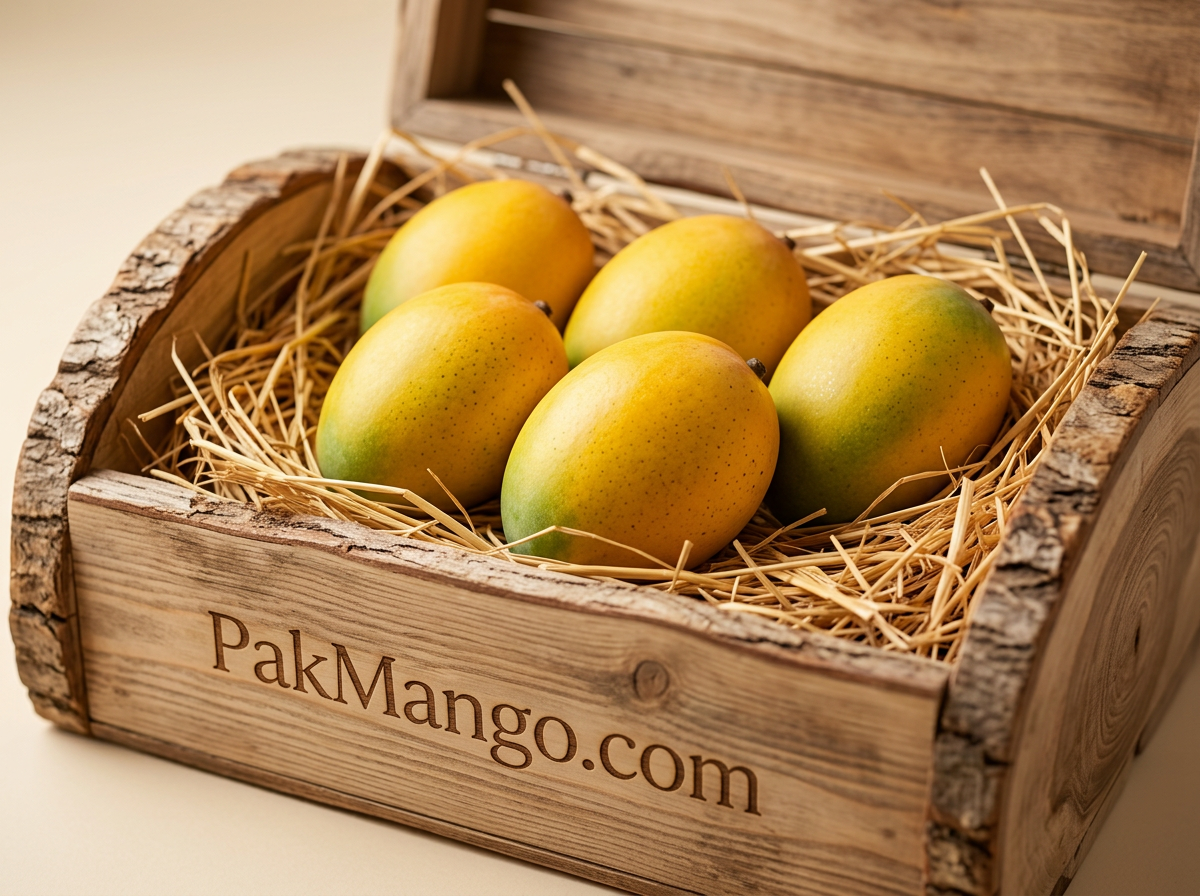
The variety that started in Lucknow
Dosehri originated in Kakori, near Lucknow, in the late 18th century. It crossed into what is now Pakistan with partition in 1947, carried as cuttings by farmers leaving the United Provinces. The southern Punjab climate suited it better than anyone expected.
Dosehri is grown in several parts of Pakistan today, particularly in southern Punjab. It is a well-established variety in the region and remains a household favourite.
A mango that smells before it tastes
Walk into a kitchen with a ripe Dosehri on the counter and you will smell it before you see it. The fragrance is the variety's signature: honey, melon, a faint trace of vanilla. The flesh is so soft and translucent that you can almost see through a thin slice held to the light.
Best eaten with a spoon, scooped from a halved fruit. Pairs perfectly with cold full-fat yoghurt and a pinch of cardamom, the classic Punjabi summer breakfast.
A delicate variety worth handling gently
Dosehri is a soft, fragrant variety. Once ripe it is best eaten quickly and gently, the flesh bruises easily and the perfume fades within a day or two of full ripeness.
As with any Pakistani mango, ripen at room temperature until the fruit yields to a gentle press, then refrigerate briefly before eating. Cold flesh stops ripening, so don't put an under-ripe carton straight in the fridge.
How Dosehri fits into the Pakistani mango season
The Pakistani mango season typically runs from May to August. Sindhri usually opens the year, Chaunsa carries the mid-summer window, Anwar Ratol and Dosehri overlap in mid-season, and Langra tends to close things out in August. Dosehri generally sits in the historical harvest window: june to july window, timing varies each year with the harvest.
If you're new to Pakistani mango, the simplest plan is to try one variety at a time across the season. Availability varies through the season, see current availability on the shop before you order.
About Dosehri
Dosehri is one of several Pakistani mango varieties that PakMango.Com offers in season. It is generally associated with orchards in Rahim Yar Khan, Punjab. Precise sourcing information for the current year's fruit is confirmed on the product page and in your order confirmation.
Fresh Pakistani mango is a seasonal product. What is actually available this week is shown as current availability on the shop.
How ordering and delivery work
Fresh Pakistani mango consignments arrive through the season. Most volume goes into our UK wholesale network; direct customer orders are allocated from the freshest available arrival. PakMango dispatches Monday to Thursday across mainland UK, and the carrier's expected delivery follows dispatch. Carrier delays are possible, so delivery dates are estimates, not guarantees.
Delivery is by tracked delivery across the UK. Tracking is emailed once the carton enters the courier network. Delivery dates are estimates, not guarantees, harvest, weather, flights and customs may affect timing.
For anything specific to a carton, a courier delay, a damaged box, or a question about arrival, contact support via the contact page and we will help you resolve it in line with our published shipping and refund policy.
Comparing Pakistani mango to other options
Pakistani mango varieties have their own flavour signatures, Sindhri's citrus brightness, Chaunsa's honeyed sweetness, Anwar Ratol's perfume, Dosehri's delicate honey-melon, Langra's tropical complexity. They are different from Alphonso, Ataulfo/Honey and Kent-family supermarket mangoes in taste, texture and season.
As with any imported tropical fruit, ripeness at arrival depends on how the fruit is handled through the supply chain. If perfume and full flavour matter, plan to ripen at room temperature until the fruit yields to a gentle press, then refrigerate briefly before eating.
Where to read next
For a general seasonal overview, see the Pakistani mango season guide. For variety-specific details, see the varieties pages linked at the foot of this article.
For practical questions about ordering, timing and delivery, see the delivery page and the FAQ. For anything not covered there, the contact page is the fastest route to support.
Frequently asked questions
- When is Dosehri in season in the UK?
- Dosehri ships to the UK from late June through August, with the peak in July alongside Anwar Ratol and Chaunsa.
- What does Dosehri taste like?
- Soft, fragrant, sweet with notes of honey, melon and vanilla. The flesh is delicate and ideal for spoon-eating or blending into lassi.
- How do I know if my Dosehri is ripe?
- The skin turns from green to a uniform pale yellow, the fruit yields gently to pressure, and the fragrance becomes intense at the stem. Eat within 2 days of full ripeness.
- Is Dosehri grown in Pakistan or India?
- Both, Dosehri originated near Lucknow but is now cultivated extensively in Pakistan's Rahim Yar Khan and Multan districts. PakMango.Com ships only Pakistani-grown Dosehri.
- Can I make mango lassi with Dosehri?
- Yes, Dosehri's high fragrance and low fibre make it the lassi mango of choice. Blend 200g ripe pulp with 300ml chilled yoghurt and a pinch of cardamom.
- How should I let a Dosehri carton finish ripening?
- Open the carton on arrival and lay the fruit out in a single layer at room temperature. Once each fruit yields to a gentle press and smells fragrant at the stem, move it to the fridge and eat within a couple of days.
More from the journal
Chaunsa: why Pakistan's king mango refuses to travel by plane until it's ready
From Multan's white-hot summer to your kitchen, the 11-day journey of the most coveted Pakistani mango.
Sindhri: the mango that announces summer two weeks before everyone else
Pakistan's earliest premium variety, grown in the heat-shock plains of lower Sindh.
Anwar Ratol: the cult mango Pakistanis ration like saffron
Small, fragrant, and gone in three weeks, the variety that proves bigger is not better.
Share this article